How Can Reducing Moisture With Leak Repairs and Dehumidifiers Help Prevent Centipedes
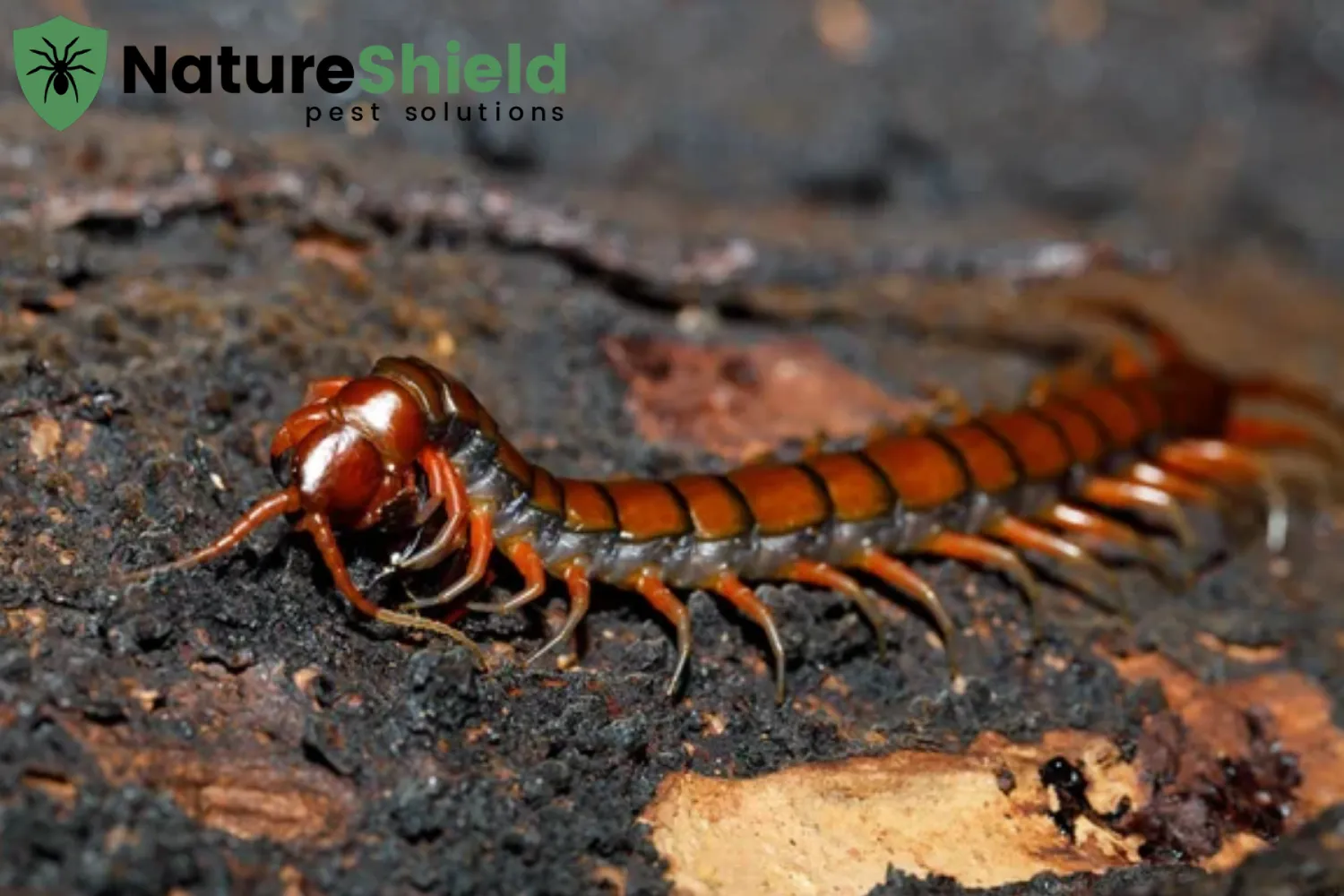
Reducing moisture through leak repairs and dehumidifiers prevents centipedes by eliminating their required habitat and eradicating their primary food source. They lack a protective waxy cuticle on their exoskeletons, meaning they dehydrate and die rapidly in relative humidity levels below 55%. Drying out structural spaces forces adults to either migrate outward or face fatal desiccation.
The Biological Link: Why Centipedes Are Bound to High-Moisture Zones
Unlike many common household bugs, centipedes are primitive arthropods whose physical bodies are entirely dependent on damp environments. They lack a water-retaining, waxy coating on their outer shells, and their breathing pores remain permanently open. This means they constantly vent their internal fluids into the surrounding air. If the air inside your crawlspace, basement, or bathroom drops below a critical humidity threshold, the centipede’s internal moisture quickly evaporates, causing rapid death.
Damp areas also act as an open invitation for a centipede’s dinner. These multi-legged creatures are strict carnivores that aggressively hunt smaller, moisture-loving pests. When plumbing leaks or unmanaged humidity lines create damp pockets behind drywall or under subfloors, they attract thriving prey populations such as:
- Silverfish: These insects love to feed on wet cardboard and damp insulation fibers.
- Sowbugs and Pillbugs: These pests gather in large numbers around wet, decaying wood and leaky basement baseboards.
- Booklice: These tiny creatures feed on microscopic mold spores that grow along damp drywall paper.
By fixing structural pipe leaks and running automated dehumidifiers, you break this biological chain completely. You dry out the shells of any invading centipedes while simultaneously starving them out by removing the smaller insect populations they rely on for food. Taking care of these underlying moisture issues with professional McBaine pest control ensures your property stops attracting these predatory pests in the first place.
Environmental Comparison: Damp Baseline Homes vs. Managed Dry Environments
Controlling indoor atmospheric moisture levels transforms vulnerable building structures into completely uninviting terrain for multi-legged pests. Understanding how moisture affects your structural risk level helps you implement long-term solutions rather than temporary fixes.
| Environmental Metric | Unmanaged High-Moisture Environment | Professionally Dehumidified Structure |
| Average Relative Humidity | Greater than 65% to 80% continuous moisture saturation. | Maintained strictly between 45% and 52% relative humidity. |
| Arthropod Desiccation Rate | Zero; centipedes can survive indefinitely across surface planes. | High; centipedes lose fatal volumes of body water within hours. |
| Prey Infestation Density | High abundance of foraging silverfish, booklice, and springtails. | Population crash; target prey species cannot feed or reproduce. |
| Structural Protection Level | Low; active fungal decay attracts scavenger insects. | High; dry timbers block wood rot and localized nesting. |
When relative humidity drops below 55%, conditions become completely uninhabitable for primitive crawling pests. Shifting your home’s ecosystem to a managed dry climate provides an invisible, natural defense line that stops invasions before they ever reach your living areas.
Debunking the Myth: “Seeing Centipedes Means Your Subfloor Wood Is Rotten”
The Misconception: “If you spot multiple house centipedes running along your basement walls or crawlspace floor joists, it serves as definitive proof that your structural timber is rotting and undergoing active fungal decay.”
This common belief is a major industry misconception that regularly misleads property owners during home evaluations. Homeowners seeking answers from certified exterminators in McBaine, MO, are often relieved to learn that centipedes do not eat wood, cellulose, mold, or decaying organic material. They are entirely attracted to the ambient humidity and the presence of other living insects.
While it is true that centipedes share the exact same high-moisture preferences as the fungi that cause wood rot, their presence alone does not mean your home’s structural framing is rotting away. A perfectly solid, pressure-treated beam, wrapped in cold, damp condensation from a nearby copper pipe, can retain enough moisture to support a pest colony. Rather than rushing into expensive, unneeded wood repairs, the logical solution is to fix the underlying plumbing leak and install targeted dehumidifiers to correct the indoor air profile.
Applying Our Hydrological Micro-Climate Inversion to Solve This
At Nature Shield Pest Solutions, we bring professional, reliable, and customer-focused expertise directly into your home or business. We reject superficial chemical applications that only provide a temporary band-aid, choosing instead to deploy our unique moisture adjustments to permanently fix environmental entry thresholds. During a recent structural diagnostic sweep for a property owner in McBaine, our field experts uncovered a hidden water line leak behind a basement wall chasm, correcting the ambient humidity to eliminate a persistent crawling pest issue without tracking excessive products into the living quarters.
Precision Moisture Diagnostics
We locate hidden pest breeding zones by combining a deep understanding of arthropod biology with high-precision tools. Our top-notch technicians use science-backed methods to ensure we find exactly where moisture is pooling behind your finished walls or inside crawlspace insulation.
We utilize advanced pinless electromagnetic scanners to trace invisible plumbing condensation trails without damaging your property. Once we chart the damp zones, we provide clear information and 100% safe, effective solutions to eliminate existing insect populations while protecting your family and pets.
Sustainable Environmental Management
To keep your home completely dry and uninviting to invading pests through intense seasonal weather shifts, our experienced technicians install high-capacity commercial dehumidification networks in vulnerable subfloors. We balance this climate control with physical exclusion barriers, packing expansion foams into utility penetrations to block underground vapors.
We believe that professional property protection should be clear, honest, and accessible to everyone, which is why we offer our premium services at highly affordable prices. Our careful, target-specific adjustments protect your landscape equity and deliver the reliable care you need for comprehensive pest control in McBaine, MO.
Equipment Specifications for Advanced Moisture Controls
- Commercial Refrigerant Dehumidifiers: High-capacity mechanical specifications equipped with integrated condensate pumps designed to run continuously inside unheated crawlspaces and basements.
- Pinless Electromagnetic Impedance Meters: Non-destructive scanning tools that emit safe radio frequencies to read moisture depths up to 1.5 inches inside masonry and timber.
- Hydrophobic Expansion Barrier Foams: Specialized cellular compounds engineered to fill utility pipe gaps while completely blocking underground water vapor and gaseous moisture paths.
- Digital Psychrometric Transmitters: Continuous monitoring sensors that record shifting dew points and ambient air temperatures, sending live data to atmospheric control systems.
People Also Ask (FAQ)
What is the ideal indoor relative humidity level to keep centipedes away?
To prevent centipedes and eliminate their prey, indoor relative humidity should be kept strictly between 45% and 50%. Dropping the air moisture below 55% causes them to lose body water faster than they can replace it.
Do centipedes hide inside dry bathroom exhaust fans?
No. They will only crawl near bathroom exhaust vents if the ducting is broken, cold, or packed with trapped condensation. Clean, properly venting exhaust fans carry damp steam safely outside, helping to keep the bathroom dry and pest-free.
How long can a house centipede survive inside a perfectly dry room?
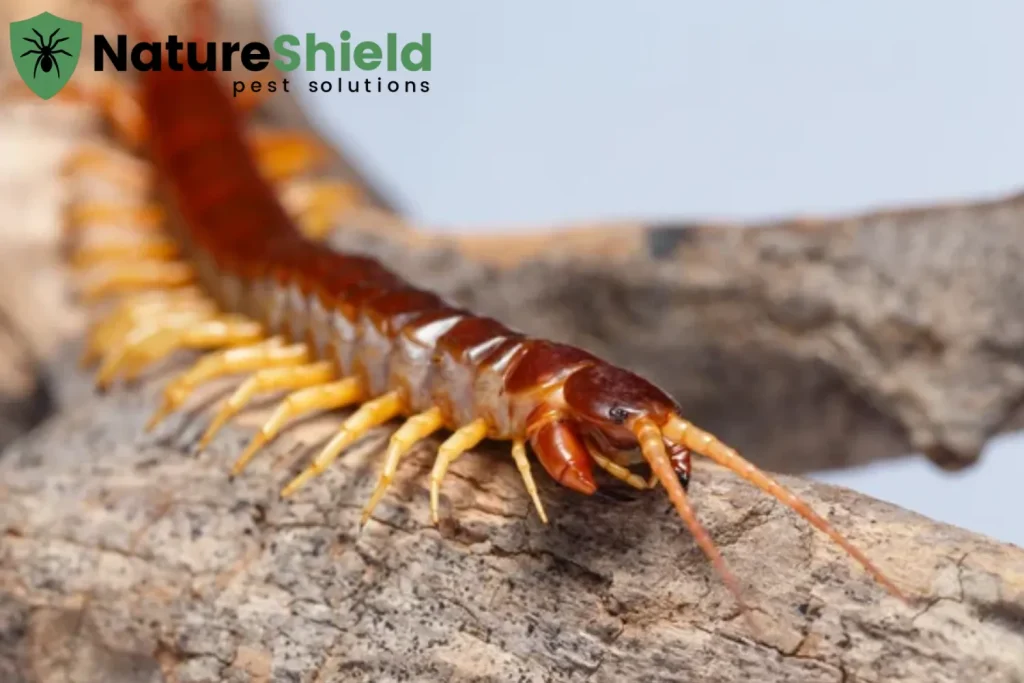
Due to their lack of a waxy cuticle and permanently open breathing spiracles, an adult house centipede trapped in a dry room with less than 40% relative humidity will typically dehydrate and die within 12 to 24 hours.
Can I get rid of centipedes using only bug sprays?
No. Bug sprays only kill the individual pests that cross the wet chemical barrier. If you do not fix the leaks, damp air, and target prey insects inside your walls, new centipedes will continuously migrate into your home to hunt.
Take Total Control of Your Property’s Climate and Comfort
Leaving hidden plumbing leaks unaddressed and allowing moisture to collect in your crawlspaces turns your home into a perfect breeding ground for crawling pests and the insects they hunt. You deserve to feel completely secure, relaxed, and reassured in the safety and hygiene of your living space. At Nature Shield Pest Solutions, we combine authoritative field expertise with a friendly, approachable demeanor, ensuring your home remains fully protected through every season.
Unlike major corporate chains, we prioritize transparency, responsiveness, and personalized attention. We build lasting relationships across our full range of areas, offering free professional evaluations and guaranteed services so you never have to worry about recurring pest issues. If pests break through your defensive shield between scheduled visits, our dedicated team of top-notch technicians and science-backed methods will return at absolutely no extra charge to you, delivering a true 5 Star Service experience.
Don’t let hidden moisture or annoying multi-legged pests disrupt your daily comfort or compromise your home’s peace of mind. Take a proactive step toward permanent structural safety today. Contact us today to schedule your free inspection, receive an honest evaluation, and experience the reliable protection you deserve.