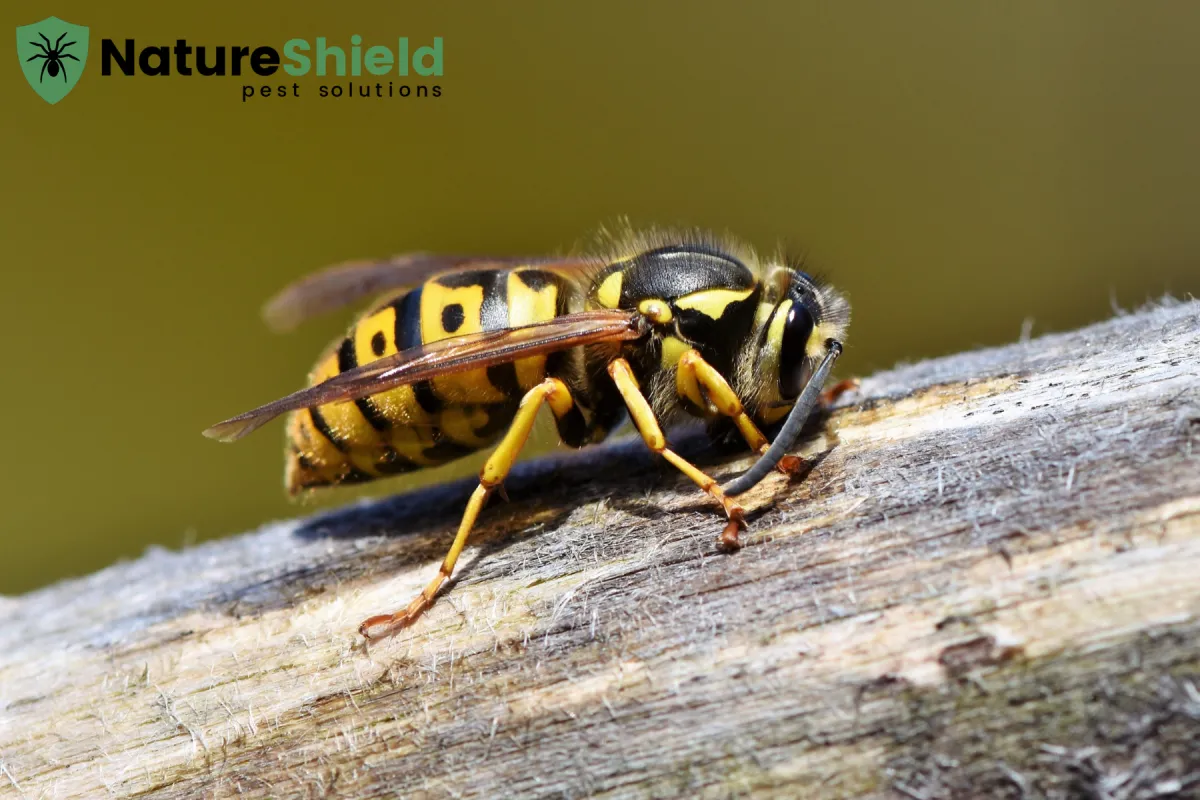
Pest control professionals safely remove wasp and hornet nests by identifying the insect species, inspecting the nest location, and choosing the right treatment method. They use proper protective equipment, secure the work area, and check the results before removing the nest or recommending ways to prevent future nesting.
How Do Professionals Inspect a Wasp or Hornet Nest?
Before treatment begins, technicians inspect the nest and surrounding area to determine the safest way to handle the problem. The location, colony activity, and type of insect all affect the removal plan.
Identifying the Insect Species
Wasps and hornets have different nesting habits, so identifying the insect is an important first step. Some wasps build paper nests under roof eaves or inside sheds, while others nest in shrubs, wall voids, or underground cavities. Hornet nesting habits also vary by species.
Correct identification helps technicians select an appropriate treatment and prepare for the risks associated with the colony.
Checking the Nest Location
A nest near a doorway, walkway, patio, or outdoor work area may pose a greater risk because people can disturb the insects accidentally. Technicians also inspect rooflines, attics, shrubs, and other sheltered areas where nests may be difficult to reach.
If the nest is inside a wall or another enclosed space, the inspection may need to identify the insects’ entry points before treatment can begin.
Assessing the Risks
During an inspection, technicians consider:
- The insect species and level of activity.
- The nest’s size and accessibility.
- Nearby people, children, and pets.
- Whether ladders or specialized equipment are needed.
- Whether follow-up treatment may be necessary.
This assessment helps determine which removal method is suitable for the property.
What Steps Do Professionals Follow to Remove Wasp and Hornet Nests?
Professional nest removal follows a planned process. The exact procedure depends on the insect species, nest location, and condition of the colony.
- Inspect the nest. Technicians identify the insects, assess activity, and check for potential hazards.
- Secure the work area. People and pets are kept away from the immediate treatment zone.
- Use appropriate protective equipment. Technicians wear suitable protective clothing and equipment based on the job’s risks.
- Apply the selected treatment. The treatment method is chosen according to the species, nest location, and site conditions.
- Check treatment effectiveness. Technicians assess insect activity and follow applicable product instructions before disturbing the nest.
- Remove the nest when appropriate. Physical removal takes place when conditions allow it to be done safely.
- Recommend prevention measures. Technicians identify possible nesting areas and suggest practical ways to reduce future activity.
Some accessible nests can be handled in one visit. Nests inside walls, attics, or other difficult locations may require additional inspection or follow-up work.
What Is the Difference Between Wasp Nest Removal and Hornet Nest Removal?
Both services involve identifying the insects, assessing the nest, and choosing a suitable treatment. However, the approach can differ depending on the species and the nest’s location.
| Factor | Wasp nest removal | Hornet nest removal |
| Common nest locations | Eaves, shrubs, wall spaces, and underground cavities | Trees, elevated areas, and sheltered spaces, depending on species |
| Inspection priorities | Species identification, colony activity, and access | Species identification, colony activity, and access |
| Treatment method | Selected according to nest conditions and insect species | Selected according to nest conditions and insect species |
| Main safety concern | Avoiding disturbance and reducing sting risks | Avoiding disturbance and reducing sting risks |
| Prevention | Addressing suitable nesting spots and property conditions | Addressing suitable nesting spots and property conditions |
The safest approach depends on the specific insect and its surroundings. A professional inspection helps determine what the nest requires rather than relying on a one-size-fits-all method.
Why Is Professional Nest Removal Safer Than DIY Methods?
Attempting to remove an active nest without proper training or equipment can lead to multiple stings. Disturbing the colony may trigger defensive behavior, especially when the nest is large, concealed, or close to an entrance.
Household sprays may not reach the entire nest, and using a ladder near active insects creates additional hazards. Sealing a nest entrance while insects are still inside can also cause problems if they find another route into the property.
Professional technicians have the training and equipment to assess these risks and select an appropriate treatment.
Consider professional assistance if:
- The nest is inside a wall, attic, roof space, or other enclosed area.
- The nest is close to a doorway or frequently used walkway.
- The colony appears large or highly active.
- The nest is elevated or difficult to reach.
- Someone on the property has a known severe allergy to insect stings.
If someone develops difficulty breathing, swelling of the throat or tongue, faintness, or other signs of a severe allergic reaction after a sting, seek emergency medical assistance immediately.
How Much Does Professional Nest Removal Cost?
The cost of professional nest removal depends on the work needed to treat the problem safely. An exposed nest that is easy to reach may require less work than a nest inside a wall or high beneath a roof.
Several factors can affect the price:
- Nest location: Elevated or concealed nests may require extra equipment and labor.
- Colony activity: The condition of the nest influences the treatment plan.
- Access requirements: Confined spaces and difficult access can add complexity.
- Treatment method: Different species and nest conditions may require different approaches.
- Follow-up work: Additional visits or prevention measures may affect the total cost.
Before scheduling service, ask what the estimate includes, whether physical nest removal is covered, and whether follow-up visits involve additional charges.
Nature Shield Pest Solutions offers free inspections to help customers understand their pest concerns and the service options available. This gives property owners a chance to discuss the problem before deciding how to proceed.
Debunking a Common Myth: Wasp and Hornet Nests Are Safe to Remove at Night
Some people believe nest removal is always safe after dark because wasps and hornets are less active at night. However, reduced activity does not eliminate the risk.
Disturbing a nest can still trigger a defensive response. Poor visibility can also make it harder to use equipment, identify obstacles, and leave the area safely.
The better approach is to have a trained technician assess the nest and determine the appropriate treatment time. Avoid hitting, shaking, spraying, or attempting to seal an active nest yourself.
Applying Our Nature Shield Service Approach to Solve This
Nature Shield Pest Solutions combines experienced technicians, top-notch customer service, careful treatment planning, and practical prevention advice. Our goal is to help homeowners and businesses address stinging insect problems with a clear plan and dependable support.
Experienced Technicians
Our trained exterminators in Jefferson City, MO inspect the affected area, assess insect activity, and identify the conditions that may affect treatment. Their experience helps them choose an approach based on the actual problem rather than guesswork.
Top-Notch Customer Service
Customers deserve clear answers about their pest concerns. Our team explains inspection findings, discusses suitable service options, and answers questions about the treatment process. We want you to understand what needs to be done and what to expect at each stage.
A Commitment to Safe and Effective Solutions
Our approach prioritizes appropriate treatment methods, professional equipment, and safety precautions for people, pets, and property. Technicians follow applicable product instructions and explain any precautions customers should take before, during, and after service.
No pest treatment can honestly be described as risk-free under every possible condition. Our focus is on responsible pest management and choosing methods suited to the situation.
Affordable Pricing and Free Inspections
Unexpected pest problems can disrupt your routine and create concerns about cost. Our free inspections help customers understand the issue and discuss suitable options before moving forward. We aim to provide affordable service recommendations without compromising responsible treatment practices.
If pests persist after a covered service, our service guarantee provides for a return visit at no additional charge, subject to the applicable service terms. With Jefferson City pest control from Nature Shield Pest Solutions, you can count on reliable service and a team committed to your satisfaction.
How Can You Prevent Wasps and Hornets From Building New Nests?
After treatment, simple property maintenance can help reduce suitable nesting opportunities. These steps cannot prevent every nest, but they may make certain areas less attractive to stinging insects.
Maintain Potential Nesting Areas
Periodically inspect roof eaves, sheds, exterior structures, and other sheltered spaces for early signs of nest construction. Maintain screens and repair suitable openings in the building exterior where appropriate.
If you suspect insects are nesting inside a wall, have the area assessed before sealing any openings.
Reduce Food Sources
Keep outdoor garbage containers closed, clean up food spills, and avoid leaving pet food outside for extended periods. These steps can reduce some food attractants around your property.
Watch for Repeated Insect Activity
If insects repeatedly enter and leave the same opening, a nest may be nearby. Observe from a safe distance and avoid blocking the entrance or disturbing the area.
Property owners seeking pest control in Jefferson City, MO can benefit from understanding these warning signs and arranging a professional inspection when an active nest poses a concern.
People Also Ask
How long does professional nest removal take?
The time required depends on the nest’s size, location, accessibility, and treatment method. Some accessible nests can be handled during one visit, while concealed nests may require additional assessment or follow-up.
Will wasps or hornets return after their nest is removed?
Removing a nest addresses the existing colony, but it does not guarantee that other insects will never build a nest nearby. Inspecting suitable nesting areas and maintaining the property can help reduce future nesting opportunities.
Can wasps or hornets build nests inside walls?
Yes. Some species nest in wall voids, attics, and other sheltered spaces. A professional may need to identify the entry point and assess the structure before selecting a suitable treatment method.
Are professional treatments safe for children and pets?
Safety depends on the product, application method, and conditions at the property. Follow the technician’s instructions about keeping children and pets away from the treatment area and when they can safely return.
Should I remove an empty nest?
An old nest may no longer be active, but it can be difficult to confirm this from a distance. If the nest is in a difficult location or you are unsure whether insects remain, seek professional advice before disturbing it.
Get Professional Help With Wasp and Hornet Nest Removal
An active nest near your home or business can make everyday activities stressful. You do not need to risk removing it yourself. A professional inspection can help identify the problem and determine the appropriate next step.
Nature Shield Pest Solutions provides customer-focused pest management for residential and commercial properties. Our experienced technicians assess the situation, explain the available options, and recommend a suitable treatment plan.
For pest control, contact Nature Shield Pest Solutions to discuss your pest concerns and request a free inspection. We are here to help you make an informed decision and take the next step toward a more comfortable property.
Learn more about our service. Contact our team to request a free quote.