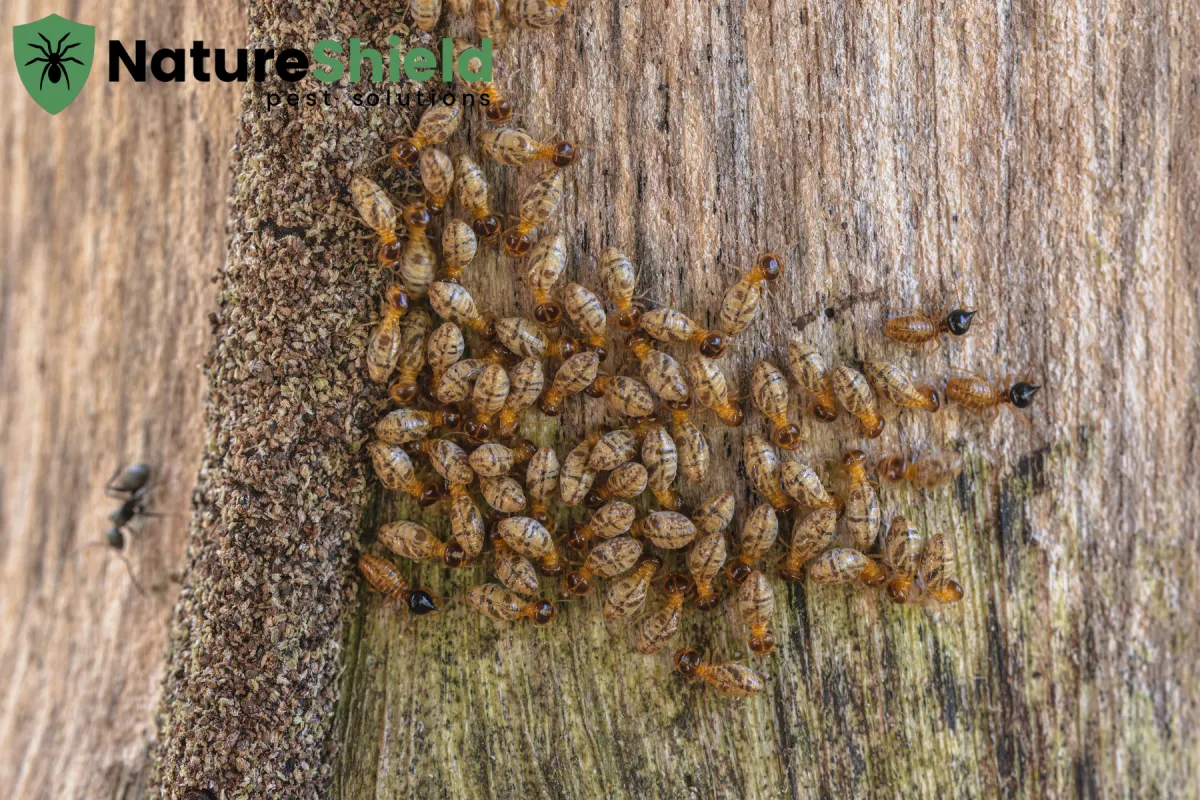
The most common signs of termites in a house include mud tubes running up foundation walls, discarded swarmer wings near windowsills, hollow-sounding wood, and tiny pellet-like droppings (frass). Noticing even one of these warning signs usually points to an active infestation that needs immediate professional treatment to prevent costly structural damage. Taking action early is the best way to protect your framing, floors, and overall property value.
Termites eat structural timbers for months without making a sound or leaving obvious signs on the surface. By the time a homeowner notices sagging floors or peeling paint, the internal wood structure may already be badly damaged. Understanding what to look for allows you to catch these hungry pests before they turn a minor issue into an expensive repair project.
Whether you live in an older home with rich hardwood framing or a newly built house with modern pine construction, no building is immune to hungry colonies. During a recent audit for a firm in Hartsburg, our technicians found that even small gaps around plumbing pipes or hidden moisture under crawlspaces can attract pests looking for food and shelter. Knowing how to spot the early warning signs keeps you in control of your living space.
Top 5 Early Warning Signs (Comparison & Action Matrix)
Identifying Active Termite Evidence
Catching an infestation early depends on knowing what each sign looks like and where it usually appears. Use this quick comparison matrix to evaluate any suspicious activity around your property:
| Indicator | Visual Appearance | Location Found | Risk Level | Immediate Action |
| Mud Tubes | Pencil-sized brown dirt tracks | Foundations, joists, crawlspaces | High | Do not scrape away; call a professional inspector immediately. |
| Discarded Wings | Small, clear, equal-sized pairs | Windowsills, door frames, light fixtures | High | Collect wings in a sealed bag for easy species identification. |
| Frass (Droppings) | Tiny, wood-colored, six-sided pellets | Below damaged trim, kick-out holes | Medium | Sweep up the pellets and watch if new piles appear overnight. |
| Hollow Wood | Blistered paint, papery outer shell | Floorboards, support beams, wall framing | Critical | Avoid heavy pressing to prevent structural collapse. |
| Swarmers | Dark-winged insects flying in groups | Near indoor/outdoor light sources | Critical | Turn off porch lights and schedule an urgent home inspection. |
Each of these indicators represents a different phase of activity. For example, discarded wings mean reproductive adults have recently landed and may be starting new colonies nearby. Mud tubes show that subterranean workers are actively moving between wet soil and your home’s wooden framing. Paying attention to these clues gives you a head start on solving the problem.
Subterranean vs. Drywood Termites: Key Differences
Species Specifications & Features
Not all wood-destroying insects behave the same way. The two primary types homeowners encounter are subterranean termites and drywood termites. Understanding their specific habits helps determine the right treatment plan.
Subterranean Termites
Primary Habitat: Nest underground in moist soil and build shelter tubes to reach above-ground wood sources.
Key Physical Feature: Highly dependent on moisture; workers have soft bodies, while soldiers possess large mandibles.
Damage Pattern: Eat soft springwood along the grain, leaving hollowed-out galleries packed with mud and soil deposits.
Drywood Termites
Primary Habitat: Live entirely inside dry wood structures such as attic beams, furniture, and hardwood trim, requiring no contact with soil.
Key Physical Feature: Produce distinct, dry fecal pellets (frass) that they push out of tiny exit holes.
Damage Pattern: Cut large, smooth galleries across the wood grain, weakening structural timbers over time.
Because subterranean species need constant moisture, they usually enter through ground-level contact points. While performing reliable pest control in Hartsburg, MO, we frequently see subterranean colonies sneaking in through small foundation cracks or timber supports buried directly in dirt. Drywood species, on the other hand, enter higher up through attic vents, roof overhangs, or infested wooden furniture.
Step-by-Step DIY Home Termite Inspection
How to Check Your Property in 4 Steps
While a full assessment requires trained eyes and specialized tools, you can perform a simple quarterly sweep around your home to check for visible signs of pest activity.
- Inspect Exterior Foundation Walls: Walk around the outside perimeter of your house with a flashlight. Look closely at concrete foundations, brick veneer, and siding gaps for brown, pencil-wide mud tubes running vertically from the ground up.
- Perform the Wood Tapping Test: Take the heavy handle of a screwdriver and lightly tap exposed wooden support beams, baseboards, and window frames. Healthy wood produces a solid thud, whereas infested wood sounds hollow, papery, or dull.
- Examine Entry Points and Windowsills: Inspect indoor and outdoor windowsills, door tracks, and garage floors for shed wings or dead flying swarmers. These are often left behind after spring mating flights.
- Check Crawlspaces and Attic Joists: Enter dark, humid zones like crawlspaces, basements, and attics. Look for sagging floor joists, peeling or blistered wall paint, and tiny piles of wood-colored pellets gathering below exposed timber.
If you notice any soft spots or crumbling timber during your walkthrough, avoid poking or pulling at the wood heavily. Disturbing an active feeding site can cause the colony to relocate to harder-to-reach areas within your walls, making treatment more complicated later on.
Applying Our 100% Safe and Effective Solutions to Solve This
A Targeted Approach to Termite Eradication
When you discover wood-destroying insects in your home, you need a solution that eliminates the colony while keeping your family, pets, and property safe. At Nature Shield Pest Solutions, we combine science-backed methods with hands-on expertise to deliver lasting results without unnecessary risks.
We rely on 100% safe and effective solutions designed to target pests at their source while remaining completely family- and pet-friendly. Our process starts with affordable pricing and free inspections, giving you full clarity on your home’s condition without upfront costs or hidden fees.
Our team of top-notch technicians uses advanced diagnostic tools like moisture meters and thermal imaging to map out hidden nest locations. By applying science-backed methods, such as targeted non-repellent liquid barriers and low-impact baiting networks, we ensure the active ingredient is carried directly back to the queen. This eradicates the entire colony from the inside out, guaranteeing long-term protection for your structure.
Whether you need a trustworthy exterminator in Hartsburg, MO, or routine monitoring to keep your property safe, our customized approach ensures that your home remains secure. We don’t just apply quick fixes; we design lasting barrier systems backed by continuous maintenance and satisfaction guarantees.
Common Industry Misconception: “If You Don’t See Termites, You Don’t Have Them”
Debunking the Invisible Pest Myth
This is one of the most dangerous assumptions a homeowner can make. Termites are hidden feeders that live underground, inside structural beams, or behind drywall. A mature colony containing hundreds of thousands of workers can feed on structural timber for 3 to 5 years before any exterior signs become visible to the untrained eye.
In many cases, homeowners only discover an infestation when a heavy piece of furniture breaks through a weakened floorboard or during a major remodeling project. Relying strictly on visual sightings often means discovering the issue after thousands of dollars in structural damage has already occurred. While relying on local Hartsburg pest control experts for regular inspections, homeowners can ensure their property stays completely protected before visible damage occurs.
People Also Ask (FAQ)
How can I tell flying ants apart from termite swarmers?
Termites have straight antennae, thick waists, and four wings that are all the same size and length. Flying ants have elbowed antennae, pinched waists, and front wings that are noticeably longer than their hind wings.
Do termites make noise inside walls?
Yes. When a colony is disturbed, soldier termites bang their heads against the wood walls to warn others, creating a faint clicking or rattling sound. If a large colony is actively feeding, you might also hear a soft rustling noise behind drywall.
How fast can termites cause structural damage?
A large, mature subterranean colony can consume roughly one foot of a standard 2×4 board in a few months. Left untreated, noticeable structural damage can occur within 1 to 3 years.
How can Nature Shield Pest Solutions help with termite problems?
Nature Shield Pest Solutions provides free home inspections, affordable pricing, and targeted, science-backed treatments applied by trained technicians to eliminate colonies permanently.
Conclusion
Don’t wait for minor warning signs to turn into costly structural repairs. Our friendly, certified team at Nature Shield Pest Solutions is ready to deliver total peace of mind with safe, effective, and long-lasting treatments.
Protect your home today; call us today to schedule your free inspection before structural damage spreads!