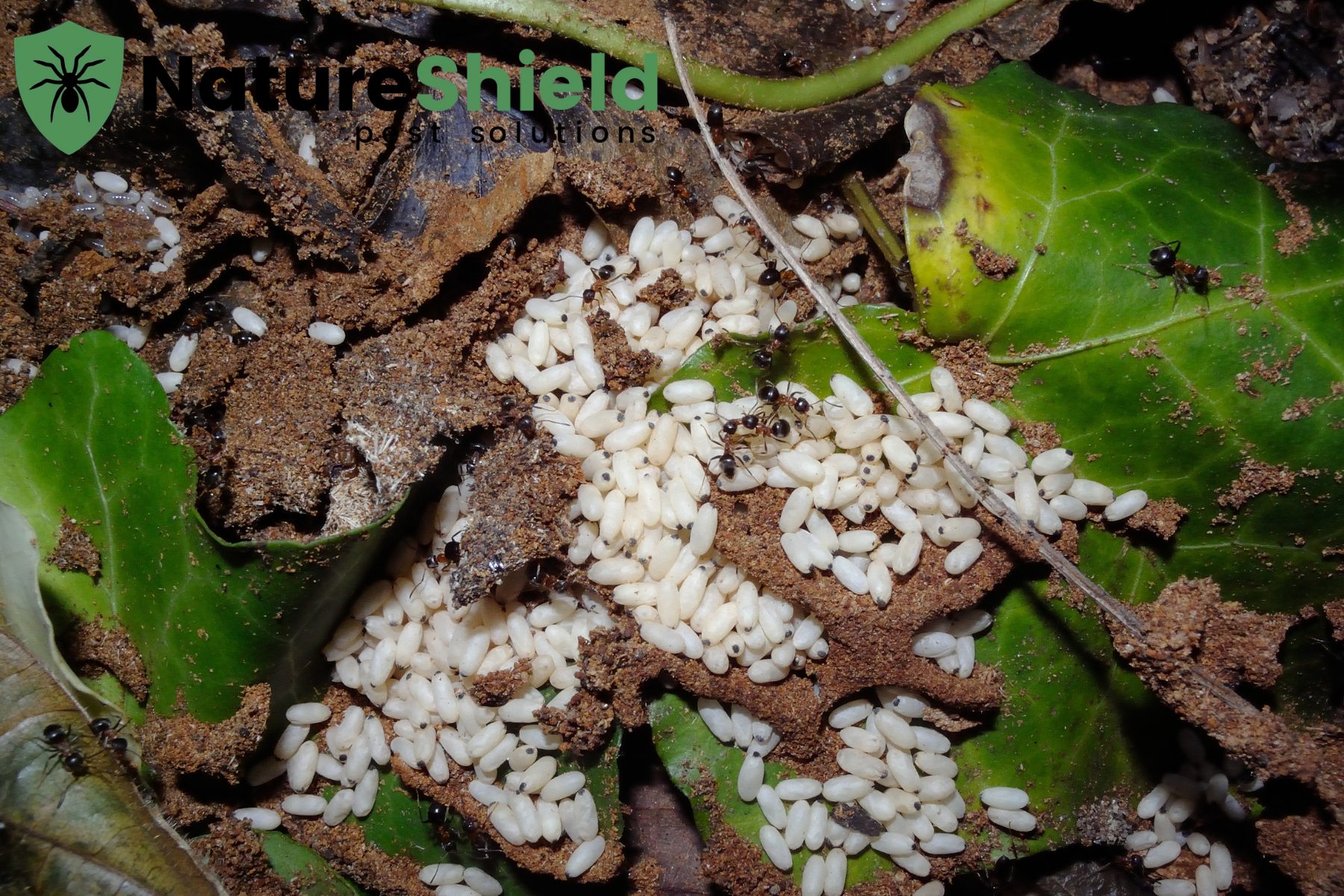
Ant eggs are typically tiny, pale white to translucent, and oval-shaped, but their appearance alone may not be enough to confirm what you have found. Looking at their size, shape, location, and whether worker ants are nearby can provide better clues when trying to identify suspected ant eggs.
If you have discovered small white particles near an ant trail or inside a suspected nesting area, it is important to distinguish ant eggs from larvae, pupae, and other household debris before deciding what to do next.
What Do Ant Eggs Look Like?
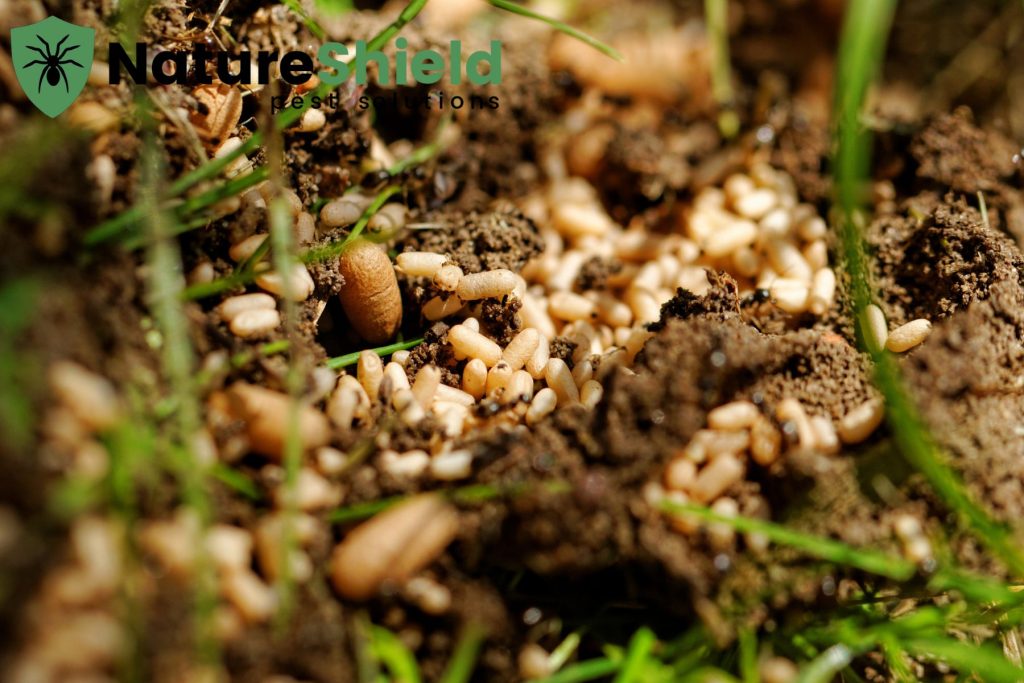
Ant eggs are generally small, smooth, and pale in color. They may appear white, cream-colored, or translucent depending on the species and the conditions in which they are found.
Individual eggs can be difficult to see without magnification. They are often found together in groups rather than scattered randomly.
However, there is no single appearance that applies perfectly to every ant species. If you find something that looks like an ant egg, consider the surrounding evidence rather than relying on appearance alone.
Useful clues include:
- Small, pale or translucent bodies
- Oval or slightly elongated shapes
- Groups of similar-looking objects
- Ant workers nearby
- Location within or near a suspected nesting area
- Other evidence of active ant activity
The presence of worker ants caring for or moving the material can be especially useful when determining whether the objects are part of an ant colony.
Where Are Ant Eggs Usually Found?
Ant eggs are generally kept in protected areas associated with the colony. Depending on the species and nesting location, they may be found in soil, under objects, within wall voids, beneath debris, or in other concealed areas.
Indoor discoveries may occur near areas where ants are already active, but finding small white particles indoors does not automatically mean they are ant eggs.
Look for additional evidence around the discovery, such as:
- Live worker ants
- Established ant trails
- Groups of ants moving between locations
- Nesting activity
- Repeated ant sightings
- Small openings where ants may be entering
The location can help provide context, but it should not be treated as proof by itself.
How Can You Tell Ant Eggs From Larvae and Pupae?
Ants pass through several developmental stages, and eggs are only one part of the process. Knowing the differences between these stages can make identification easier.
Ant Eggs
Eggs are generally the smallest stage. They are usually pale and smooth and do not have visible legs or other developed body structures.
Ant Larvae
Larvae are more developed than eggs and typically have a soft, legless body. They may look somewhat like tiny pale grubs.
Worker ants may tend to larvae within the colony, moving or feeding them as they develop.
Ant Pupae
Pupae represent a later stage of development. Depending on the ant species, they may appear pale or darker and can have a more recognizable body shape than larvae.
Some ant pupae may resemble small adult ants that have not yet fully developed.
Adult Ants
Adult ants have recognizable body segments, legs, and antennae. Their size, color, and body shape vary considerably between species.
If the material you found has legs or a clearly developed body, it is unlikely to be an ant egg.
Can Ant Eggs Be Confused With Other White Particles?
Yes. Small white particles found around a home can have many possible explanations.
Depending on where they are located, they could be insect-related material, plant debris, dust, food particles, or other household debris.
This is why it is better to consider multiple clues instead of assuming that every small white object near an ant trail is an egg.
When possible, take a clear close-up photograph before disturbing the material. A photograph can help with later identification, particularly if the objects are extremely small.
Also note:
- Where you found them
- Whether ants were nearby
- Whether the objects were clustered
- Whether you have noticed an ant trail
- Whether the material has appeared more than once
- Whether the objects change or disappear over time
These details can help distinguish a possible ant-related discovery from unrelated debris.
Does Finding Ant Eggs Mean There Is a Nest Nearby?
Finding suspected ant eggs can indicate that they are associated with an active colony, but it does not necessarily mean that the nest is immediately next to the location where you found them.
Ant colonies may use concealed nesting areas, and workers can move brood within the colony or between connected areas.
For example, seeing pale material near an indoor ant trail does not automatically mean the colony is located directly underneath that spot.
Instead, look for a combination of signs:
- Repeated worker-ant activity
- Established trails
- Ants entering or leaving a crack or opening
- Clusters of ants in a concealed location
- Repeated discoveries of suspected brood
- Activity in nearby protected areas
The more pieces of evidence you can connect, the easier it may be to determine whether the discovery is associated with an active colony.
What Other Signs Can Confirm Ant Activity?
Suspected eggs are only one possible indication of ant activity.
Other signs may provide stronger evidence that ants are regularly using an area.
Ant Trails
Repeated lines of worker ants moving between a food source and a concealed location can indicate an established route.
Entry Points
Check around cracks, gaps, window frames, doors, utility penetrations, and other openings where ants may enter.
Repeated Sightings
Seeing individual ants occasionally is different from finding ants consistently in the same area.
Nesting Activity
Clusters of ants or other signs in protected spaces may provide clues about where a colony is located.
Food-Seeking Activity
Ants may repeatedly visit areas where food or moisture is available. Tracking their movement can sometimes provide useful information about where they are entering or traveling.
If you are researching pest control in Boonville, MO, identifying these surrounding signs can be more useful than focusing on a single suspected egg or small cluster of particles.
What Should You Do If You Find Suspected Ant Eggs?
Start with identification rather than immediately treating the area.
If possible, photograph the material and observe whether worker ants are present. Avoid disturbing a suspected nesting area before you have gathered enough information to understand what you are seeing.
1. Photograph the Material
Use a close-up photograph with adequate lighting. Including a familiar object for scale can also help show how small the material is.
2. Observe Nearby Ant Activity
Look for worker ants, trails, or ants entering and leaving a particular opening.
3. Check the Surrounding Area
Inspect nearby cracks, gaps, concealed spaces, and areas where ants have repeatedly been observed.
4. Look for Additional Signs
Check whether you are seeing larvae, pupae, adult ants, or other evidence of colony activity.
5. Avoid Assuming the Source
Finding suspected eggs does not necessarily tell you exactly where the colony is located. Follow the activity rather than assuming the nearest visible location is the nest.
Should You Remove Ant Eggs Yourself?
If the material has been clearly identified as ant brood, physically removing it may not address the underlying colony.
Ant colonies can contain brood in protected nesting areas that are difficult to access. Removing material that happens to be visible may therefore have little effect on the wider colony.
Before taking action, determine whether the discovery is actually associated with ants and whether there is continuing activity nearby.
This is particularly important when ants are repeatedly appearing after visible material has been removed.
Why Might Ants Keep Appearing After You Remove the Visible Signs?
Removing visible ants or suspected eggs does not necessarily address the reason ants are using the property.
Recurring activity may be associated with factors such as:
- Accessible food
- Moisture
- Entry points
- Protected nesting areas
- Vegetation contacting the structure
- Cracks or gaps
- Conditions around the exterior
- A colony located elsewhere on the property
For homeowners considering Boonville pest control, identifying the conditions supporting recurring activity can help determine whether the problem is limited to occasional ants or involves a more established colony.
The appropriate response depends on the ant species, where the colony is located, and the conditions allowing activity to continue.
How Can You Find Where Ants Are Coming From?
Following worker-ant activity can sometimes provide clues about where ants are entering or traveling.
Rather than immediately treating every area where ants are visible, observe their movement when practical.
Pay attention to:
- Where ants first appear
- The direction of established trails
- Cracks or gaps they use
- Areas where trails disappear
- Points where ants enter from outdoors
- Moisture-prone locations
- Areas where food is accessible
Ant trails can change depending on food availability and environmental conditions, so one observation may not reveal the complete route.
If activity is recurring, tracking patterns over time can provide more useful information than focusing on a single sighting.
When Should You Contact a Pest Professional?
Professional help may be appropriate when you repeatedly find suspected ant eggs, cannot determine what the material is, or continue seeing ants despite reasonable efforts to address obvious attractants and entry points.
Consider getting an inspection if:
- Ant activity keeps returning
- You repeatedly find suspected ant brood
- Ants are emerging from walls or other concealed areas
- You cannot locate where ants are entering
- Multiple areas of the property show activity
- You are unsure which type of ant you are dealing with
- DIY efforts have not resolved recurring activity
For homeowners looking into pest control in Boonville, a professional inspection can help determine whether the visible ants are connected to a nearby colony or another source of recurring activity.
What Does a Professional Ant Inspection Look For?
A professional inspection should focus on understanding the source and pattern of activity rather than simply treating the location where ants were seen.
Depending on the property, an inspection may consider:
- Where ants are repeatedly appearing
- Entry points around the structure
- Ant trails
- Moisture conditions
- Food sources
- Vegetation near the building
- Cracks and structural gaps
- Accessible and concealed nesting areas
- Signs that may help identify the ant type
The information gathered during an inspection can help determine which management steps are appropriate.
Identification matters because different ant species can have different nesting habits and behaviors. Treating without understanding the source may fail to address why the activity continues.
How Can You Prevent Recurring Ant Activity?
Once the source of activity has been identified, reducing conditions that support ants can help limit future problems.
Reduce Accessible Food
Store food in sealed containers and clean crumbs, spills, and food residue promptly.
Address Moisture
Repair plumbing leaks and other moisture problems where practical. Moisture can make certain areas more attractive to ants.
Seal Appropriate Entry Points
Inspect cracks and gaps around doors, windows, utility penetrations, and other areas where ants may enter.
Manage Vegetation
Keep vegetation and organic debris from creating unnecessary contact with the structure.
Monitor Recurring Trails
If ants return, pay attention to where they appear and where they travel. Recurring patterns can help identify the source.
Avoid Relying on One Visible Sign
A few ants or a small group of suspected eggs may not tell the whole story. Consider the broader pattern of activity before deciding what action is necessary.
Can You Identify Ant Eggs Without Seeing the Ants?
Sometimes, but identification may be difficult from the eggs alone.
The appearance of ant eggs can overlap with other small, pale materials, and different ant species may vary in size and other characteristics.
If no adult ants or other colony signs are present, it may not be possible to make a confident identification based solely on a casual visual inspection.
In that situation, documenting the material and its location can be more useful than immediately assuming what it is.
Are Ant Eggs Dangerous to People or Pets?
Ant eggs themselves are generally not the main concern when ants are found inside a home.
The more important issue is understanding why ants are present and whether there is an active colony using the property.
Some ant species can bite or sting when disturbed, while others are primarily a nuisance. The potential impact therefore depends on the species involved.
If you are uncertain what type of ant you have found, avoid handling an unknown insect or disturbing a suspected nest unnecessarily.
Frequently Asked Questions
What do ant eggs look like?
Ant eggs are generally tiny, pale white to translucent, smooth, and oval-shaped. Their exact appearance can vary between ant species.
How can I tell ant eggs from larvae?
Ant eggs are smaller and generally smooth and oval, while larvae are more developed and typically have soft, legless bodies. Looking at the surrounding ants can also provide useful identification clues.
Where do ants keep their eggs?
Ants generally keep their brood in protected areas associated with the colony. Depending on the species, this may include soil, concealed spaces, or other sheltered nesting locations.
Does finding ant eggs mean I have an ant infestation?
Not necessarily from the discovery alone. Suspected ant eggs combined with repeated worker activity, trails, or other colony signs provide stronger evidence of an active ant problem.
Can small white particles be mistaken for ant eggs?
Yes. Household debris and other materials can resemble ant eggs. Consider the size, shape, location, and presence of nearby ants before assuming what the material is.
Should I remove ant eggs if I find them?
Removing visible material may not address the underlying colony. If ant activity continues, identifying the source is generally more useful than repeatedly removing individual signs.
When should I call a pest professional about ant eggs?
Consider professional help when you repeatedly find suspected ant brood, cannot identify the material, or continue seeing ants without being able to locate or address the source.
About Nature Shield Pest Solutions
Nature Shield Pest Solutions helps homeowners investigate recurring pest activity by considering where pests are found and the conditions that may support them. Understanding the source of ant activity can help determine the appropriate next step when ants continue appearing around a property.
Conclusion
Ant eggs are generally tiny, pale, smooth, and oval, but appearance alone does not always provide enough information for reliable identification. Looking for worker ants, trails, nesting activity, and other signs can provide important context.
If you repeatedly discover suspected ant eggs or cannot determine where the ants are coming from, focus on identifying the source rather than simply removing the visible material.
Need Help With Recurring Ant Activity?
If ants continue appearing around your property and you are unsure where the activity is coming from, Nature Shield Pest Solutions can help you explore appropriate pest-management options.
Reach to us today to learn more.
LEARN MORE HERE:
How Effective Is Borax For Ants: A Comprehensive Guide
Getting Rid Of Sugar Ants: A Comprehensive Guide
Frass, Wings & Wood Shavings: Decoding the Clues of a Carpenter Ant Infestation